We didn't set out to build a packaging company. We set out to solve one client's problem — and discovered there were a couple hundred more just like it within an hour's drive.
2014 · One trailer.
The whole thing started in a rented bay off South 10th Street with a single 53-foot trailer of empty Gaylord boxes a food co-packer needed gone before Monday. We sorted them by hand over a weekend, sold the good ones to a contract assembler in Kenosha, and recycled the rest. That weekend paid for the rent on the bay for six months.
The lesson stuck: the packaging industry has a giant, expensive, carbon-heavy waste problem hiding in plain sight. Most boxes get used once, then crushed and pulped — even though they've got three or four more honest trips in them. The economics only look right because nobody is counting the externalities.
Used boxes are like used books. The first owner is the one who paid full price. Everyone after that is just smart.
2017 · The yard.
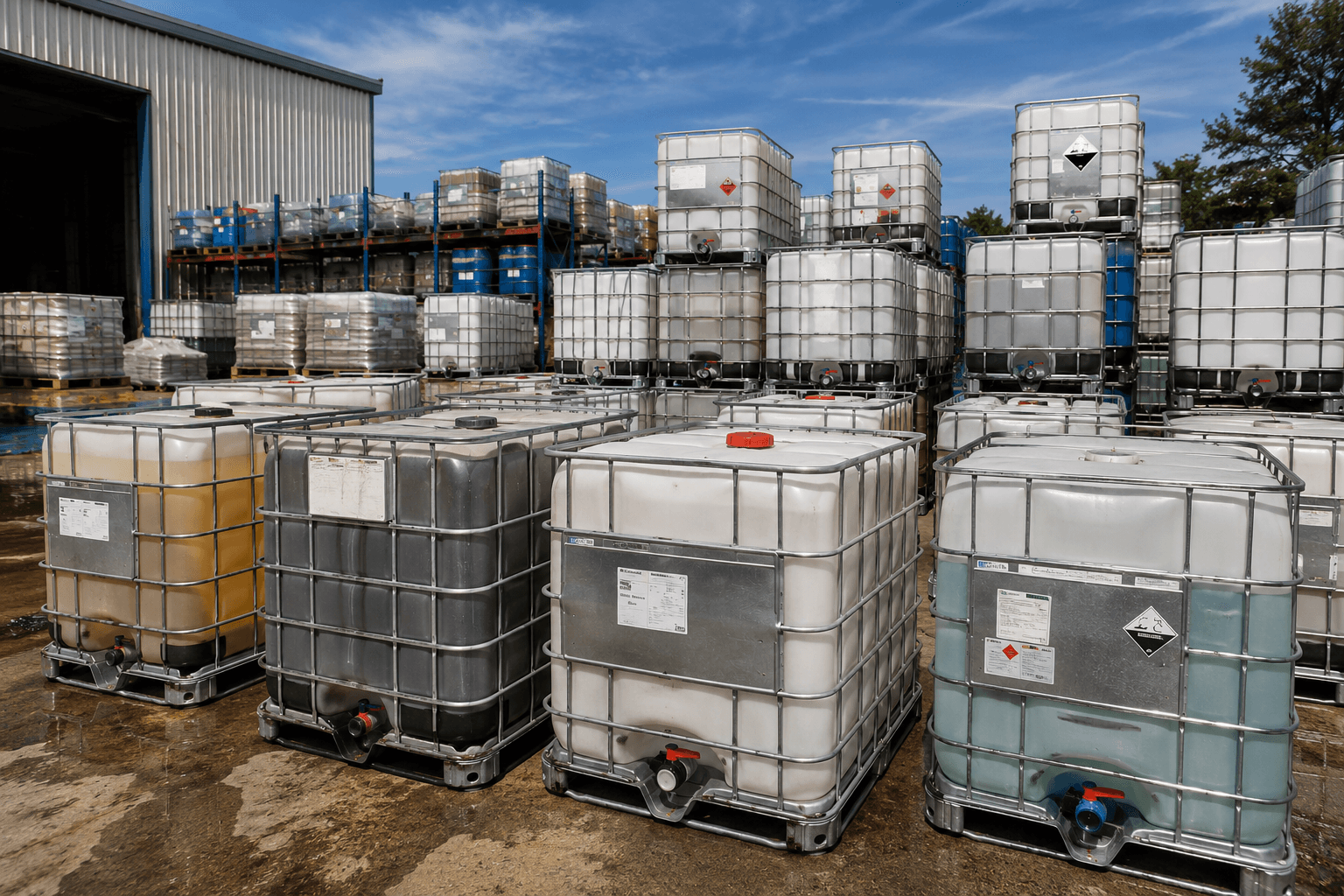
By 2017 we'd outgrown the rented bay and moved to our current home at 7335 S 10th St in Oak Creek — a 60,000 square foot indoor yard with three dock-high doors, two forklifts, a baler, and enough rack space to stage twenty truckloads at once. We added our first IBC tote washing station that fall.
2019 · Closed loops.
A regional 3PL asked us a question we'd been waiting for: could we set up a recurring program where their outbound packaging cycled back, got regraded, and shipped again? We could. The first closed-loop contract ran 4,000 boxes per month with a 91% reuse rate. We've got eleven of those running now.
2021 · Zero landfill.
We made a commitment that no corrugate handled at our yard would ever go to a landfill. Not the wet ones, not the contaminated ones, not the ones nobody wants to buy. We worked with a Wisconsin pulp partner to take everything we can't reuse — at a margin sometimes thinner than a single ply of liner board. We haven't broken the promise yet.
Today · The math.
We move roughly 35,000 reclaimed Gaylord boxes a year, recondition another 8,000 IBC totes, and route somewhere around 12 truckloads a week of pallets, lids, and accessory packaging. Across Wisconsin, Illinois, Minnesota, Indiana, and Michigan — wherever a forklift can reach.
We are family-owned, deliberately small, and pricing our boxes for what they actually are: industrial workhorses, gently used, ready to roll again.
Milestones, year by year.
| Year | Milestone |
|---|---|
| 2014 | First rented trailer of Gaylord boxes, Caledonia food co-packer cleanout. Saturday weekend job. |
| 2015 | First repeat customer in Kenosha contract assembly. Inspection rubric written down. |
| 2016 | First IBC tote load reconditioned and shipped. Word-of-mouth in the WI manufacturing network. |
| 2017 | Move to 7335 S 10th St, Oak Creek. First dedicated 60,000 sq ft yard. |
| 2018 | Discontinued our phone line. Email-only customer support. |
| 2019 | First closed-loop program — co-packer in Pleasant Prairie to retail DC in Chicago. Still running. |
| 2020 | COVID supply chains shift demand toward regional packaging. Hire two more inspectors. |
| 2021 | Zero-landfill commitment goes public. Mill partner contract signed. |
| 2022 | One thousandth distinct customer relationship logged. First annual sustainability rollup published. |
| 2023 | Inspector calibration program formalized as weekly drill. Inspector training curriculum documented. |
| 2024 | Eleventh closed-loop program signed. Annual reuse rate above 87% for second consecutive year. |
| 2025 | Two new closed-loop programs onboarded. Route-efficiency CO₂ tracking added to sustainability metrics. |
| 2026 | Spring inventory peak — busiest April in company history. We managed it. Barely. |
The team, plainly.
Fourteen people, plus a handful of part-time dock support during peak weeks. The dock crew has been with the company an average of 4.2 years — which is unusually high for industrial floor work. We pay above the regional median for inspection-grade hourly work, and we offer profit-sharing once an employee has been with us 12 months. We do not have a formal HR department. We do not have a CEO. We have a yard manager (Pete), an inspection lead (Sarah), an operations lead (Marisol), and the rest of the team does the work that needs doing.
We are not hiring most of the time. When we do, the listing goes up on a single regional manufacturing job board and never on a general-purpose site. The people we want for this work are people who already do this kind of work.
What being family-owned means here.
We are owned by two families with deep ties to southeast Wisconsin manufacturing. Neither family takes a management salary. The company is structured so that retained earnings get reinvested in equipment, training, and our recycling-stream contracts. There is no equity overhang, no quarterly board meeting that drives short-term decisions, no exit timeline.
The practical effect: we say no to customers when we are not the right vendor. We hold prices when commodity markets move against us. We invest in things — the IBC wash station upgrade, the inspector training curriculum — that pay back over years rather than quarters. None of that is virtuous, exactly. It is just what a privately-held packaging yard can do that an investor-owned one cannot.
Where we have made mistakes.
A few worth naming.
- 2017 — moving too slow on the wash station. We knew by mid-2016 we should bring IBC reconditioning in-house. We did not pull the trigger until late 2017 because we kept underestimating demand. We probably lost a year and a half of margin sitting on the fence.
- 2019 — under-specced the first closed-loop fleet. Used double-wall Gaylords because the unit cost was lower. The boxes did not last. We re-specced to triple-wall after three months and ate the difference.
- 2020 — turned down a customer we should not have. A Madison-area distributor that did not fit our internal volume model became a major player a year later. By then they were buying from a competitor. We made the wrong call.
- 2022 — onboarded a closed-loop program in a route geography that did not pencil. We knew it on day one and signed anyway because the brand name was tempting. The program ran at a loss for eight months before we unwound it.
We are writing these down because we get asked, in customer conversations, whether we have ever made a serious operational mistake. The answer is yes, and the more useful version of the answer is which ones.
What hasn't changed
- A human inspects every box before it gets graded.
- We answer email within one business day. Always.
- Nothing goes to a landfill.
- If you bring us a problem, we'll bring you a quote — even if the answer is "you should talk to someone else."